Weather Influences on Track Conditions and Their Effects in Elite Racing Circuits
Blake Lorenz · Oct 3, 2026
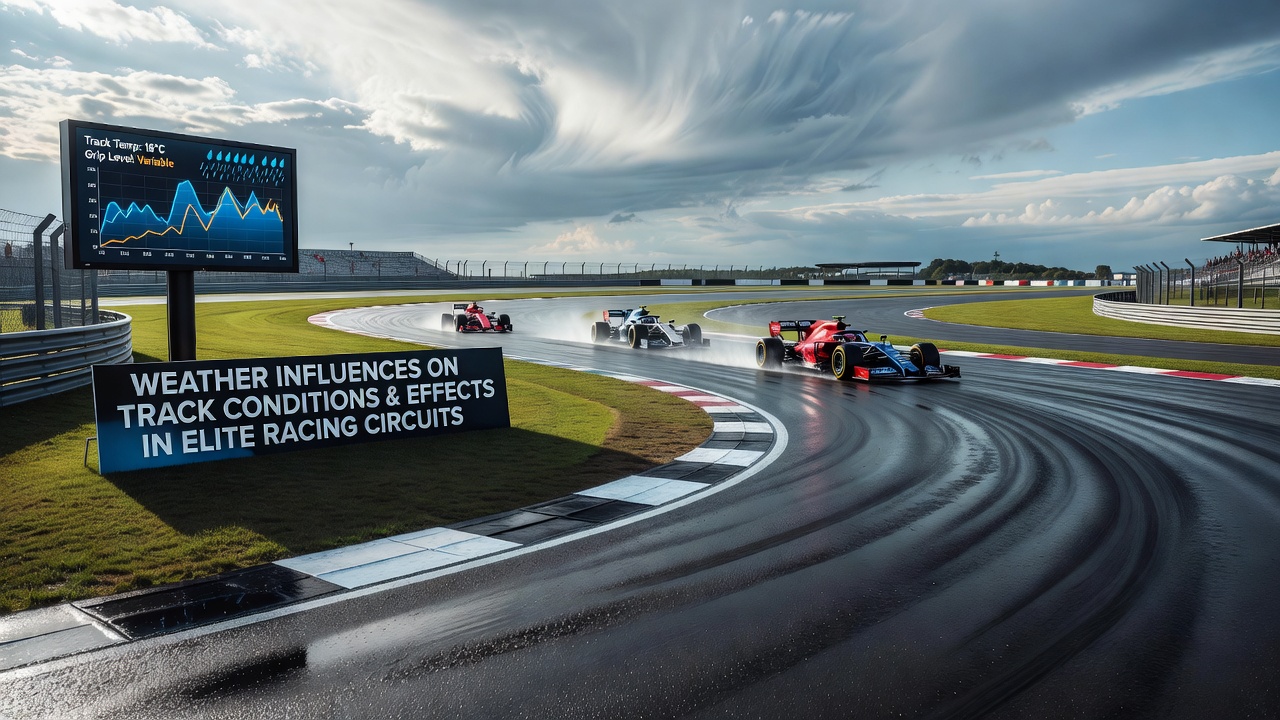
Weather Influences on Track Conditions and Their Effects in Elite Racing Circuits
Weather patterns shape track surfaces in elite racing circuits through direct interactions with asphalt, rubber compounds, and vehicle dynamics, and data collected over multiple seasons demonstrate measurable shifts in friction coefficients and lap times. Temperature swings alter the molecular structure of track materials while precipitation modifies surface water films that either enhance or reduce tire adhesion depending on volume and duration. Observers at circuits from Monza to Suzuka note these changes through sensor arrays embedded in the pavement that record real-time thermal and moisture readings.
Temperature Effects on Asphalt and Tire Interaction
High ambient temperatures raise asphalt surface readings above 50 degrees Celsius in many summer events, which softens the bitumen binder and increases rolling resistance yet also improves initial grip for slick tires until the compound overheats. Researchers monitoring circuits in the Middle East and southern Europe have recorded how cooler morning sessions produce harder track surfaces that demand different suspension setups compared with afternoon runs when heat builds. Conversely, low temperatures below 15 degrees Celsius stiffen the asphalt and reduce microscopic contact patches between tire and road, forcing teams to adjust camber angles and pressures to maintain cornering forces.
Studies from motorsport engineering groups indicate that a 10-degree Celsius rise in track temperature can shorten optimal tire life by up to 15 percent in high-downforce cars, while the same increase extends warm-up periods for drivers entering the circuit. These thermal cycles also cause expansion joints to shift slightly, creating subtle bumps that accumulate over a race distance and influence fuel consumption calculations.
Precipitation and Changes in Surface Grip
Rainfall introduces a water layer that disrupts the mechanical interlocking between tire treads and asphalt texture, and measurements at circuits such as Spa-Francorchamps show aquaplaning thresholds reached once water depth exceeds 2 millimeters at speeds above 200 kilometers per hour. Drainage systems installed along straights and corners channel runoff, yet residual moisture in shaded sections lingers longer and creates localized grip variations that appear in telemetry traces as sudden yaw rate spikes.
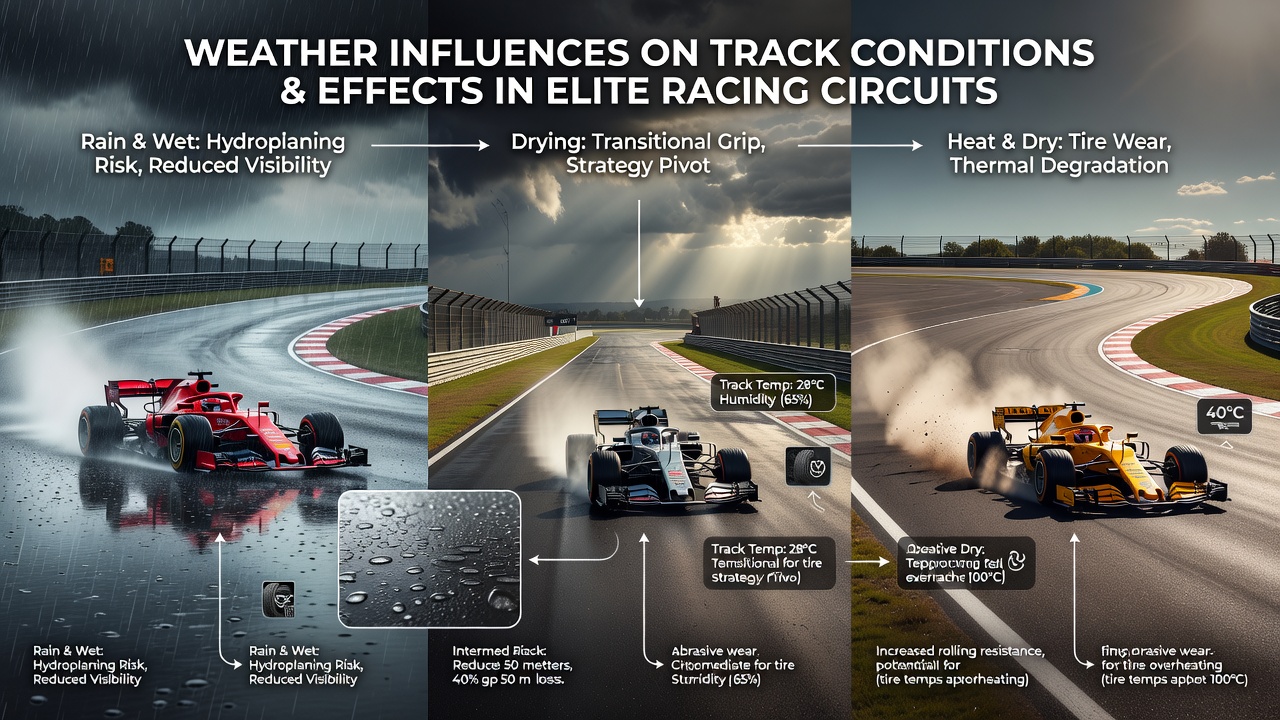
Light drizzle often produces the most unpredictable conditions because it wets the surface without fully flushing away rubber residue from previous dry running, resulting in a slippery intermediate state. Data from the European Centre for Medium-Range Weather Forecasts integrated with circuit sensors have helped organizers issue timely red flags when cumulative rainfall reaches thresholds that compromise braking distances. In October 2026 several North American and Asian venues plan to deploy enhanced laser-based surface scanners that map water film thickness in real time to refine these decisions.
Wind, Humidity, and Aerodynamic Considerations
Crosswinds above 30 kilometers per hour exert lateral forces on high-sided vehicles and alter the effective angle of attack on front and rear wings, which changes downforce distribution along straights and through fast corners. Humidity levels above 70 percent slow heat dissipation from brakes and tires, extending the time required for components to reach peak operating windows and indirectly affecting lap consistency across a stint. Engineers at circuits in coastal regions track these variables alongside barometric pressure because denser air at sea level increases aerodynamic drag yet also boosts engine power output in naturally aspirated configurations.
Wind tunnels and computational fluid dynamics models calibrated against on-track recordings reveal that gust patterns around grandstands and tree lines create micro-climates that differ from open sections of the same circuit. Teams therefore incorporate anemometer data into pre-session briefings so drivers anticipate handling shifts when entering wind-shadow zones.
Documented Cases Across Global Circuits
One analysis of the 2023 Singapore Grand Prix showed how evening humidity combined with rising track temperatures after sunset produced a narrow optimal tire window that rewarded precise energy management. Similar patterns emerged during Australian events where sudden afternoon showers forced rapid strategy pivots based on radar updates from the Bureau of Meteorology. In North America the National Weather Service supplies granular forecasts to IndyCar teams preparing for oval and road course events, enabling proactive adjustments to brake duct settings ahead of changing wind directions.
These examples illustrate how integrated meteorological and track-surface data streams now guide regulatory bodies such as the FIA when setting minimum tire pressure limits or declaring wet-race procedures. Continued refinement of predictive models supports consistent safety margins while preserving competitive balance across diverse climates.
Conclusion
Weather continues to exert measurable control over track conditions in elite racing circuits through temperature-driven material changes, precipitation-induced grip loss, and wind effects on vehicle balance, and ongoing sensor networks plus regional weather services supply the factual foundation for operational decisions. Circuits scheduled through late 2026 will rely on these same integrated datasets to maintain performance standards and safety protocols under evolving atmospheric conditions.