What Statistical Models Reveal About Performance Trends in International Tennis Tournaments
Parker Weber · Sep 5, 2026
What Statistical Models Reveal About Performance Trends in International Tennis Tournaments
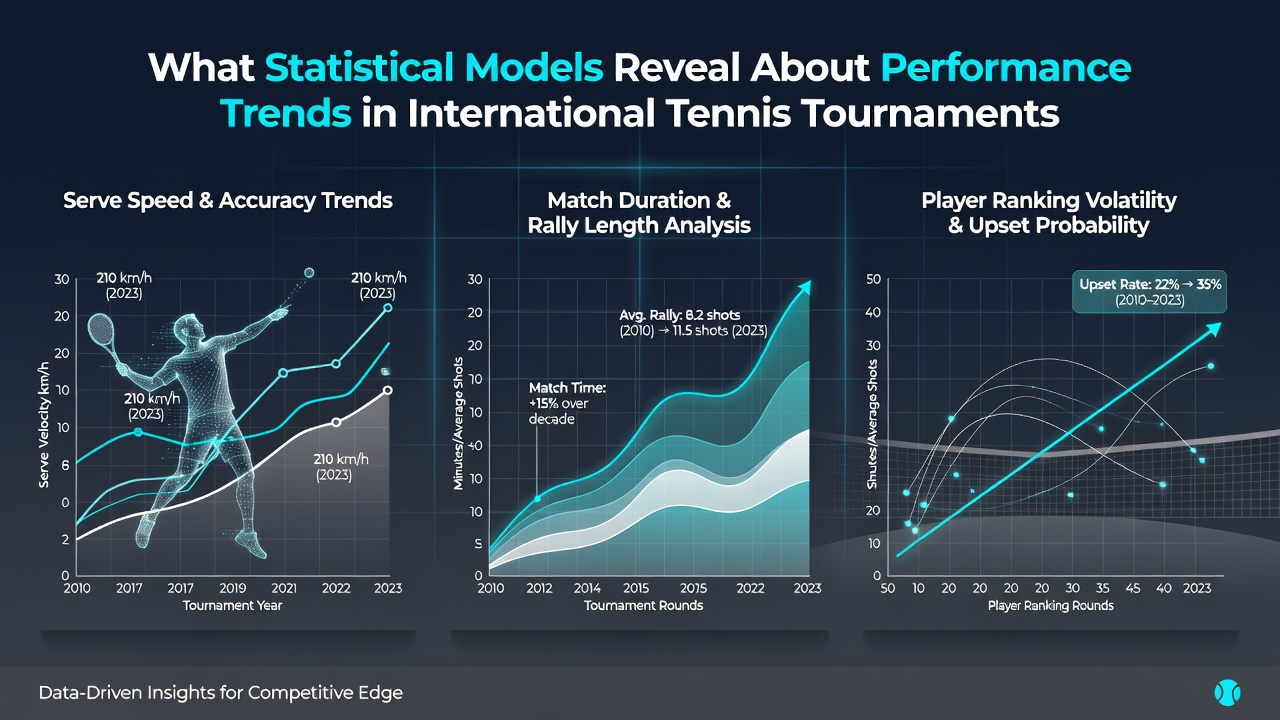
Statistical models applied to decades of match data from Grand Slams and other major events show consistent patterns in how players perform on different surfaces, at various ages, and under changing tournament conditions, while researchers continue to refine these approaches with new datasets each season.
Ranking Systems and Predictive Accuracy
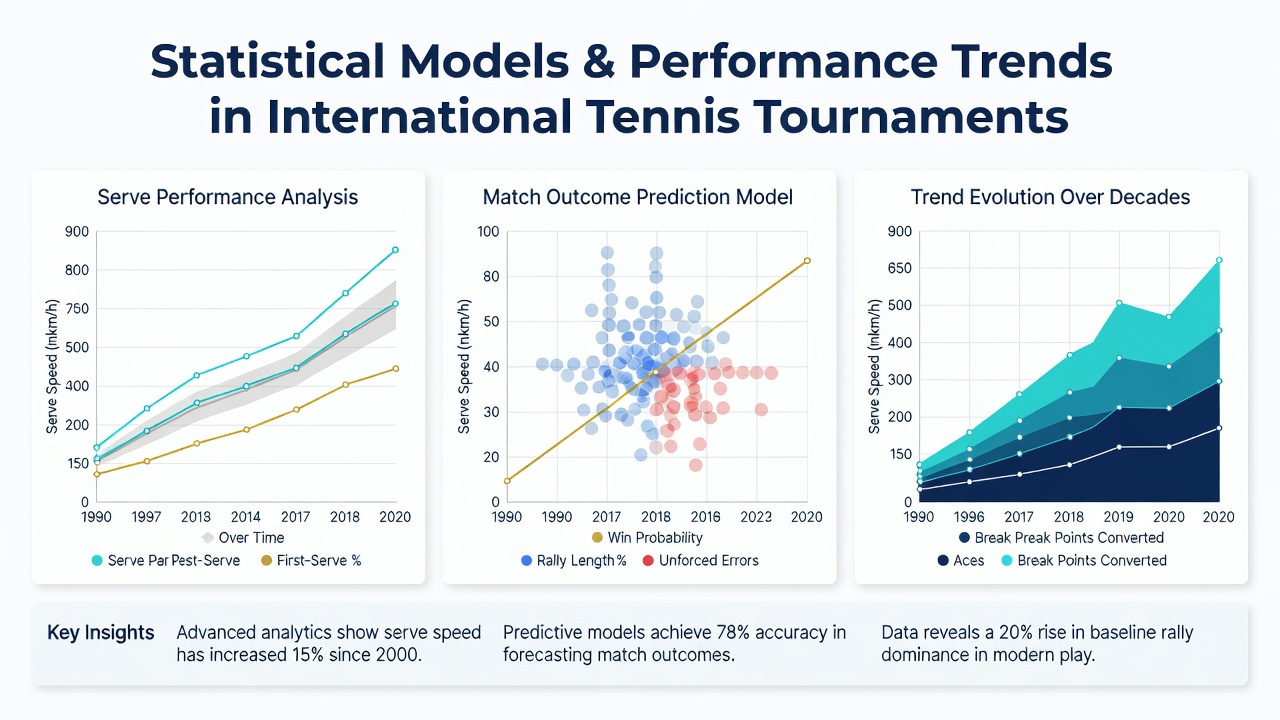
Traditional ranking points accumulated through tournament results provide one baseline yet advanced models like those adapted from chess ELO ratings offer sharper forecasts of match outcomes because they account for head-to-head history and surface-specific results more dynamically. Observers note that these adjusted systems have demonstrated higher accuracy when predicting upsets in best-of-five sets compared with straight ranking differentials alone, and data from multiple seasons indicates they adjust faster after a player returns from injury or changes coaching teams.
Serve and Rally Dynamics Over Time
Analysis of point-by-point records reveals that average first-serve percentages have remained stable around 60 percent in men's events while second-serve win rates have edged upward slightly in recent years, partly because players now target specific zones on the court with greater precision thanks to improved video scouting. Women competitors show a parallel but smaller shift, with rally lengths lengthening modestly on clay courts where statistical breakdowns separate baseline exchanges from net approaches more clearly. Those who've examined ATP and WTA archives find that tiebreak performance correlates strongly with overall tournament success, since models weight late-set efficiency higher than early-round dominance.
Age Curves and Career Longevity Patterns
Regression models fitted to birth cohorts demonstrate that peak performance windows differ by surface, with hard-court specialists often reaching their highest win percentages between ages 24 and 28 while clay-court specialists maintain elevated levels into their early thirties. Longitudinal data further indicates that players who reduce their schedules after age 30 experience slower declines in ranking points when they prioritize recovery weeks, and one study tracking multiple Grand Slam participants found measurable drops in movement speed metrics that precede ranking slippage by several months. Australian researchers tracking elite juniors through to senior tours have documented similar trajectories, showing early specialization on a single surface accelerates early success but narrows the age range of peak output.
Surface-Specific and Tournament-Format Influences
Multilevel models that incorporate court speed ratings and altitude adjustments reveal larger home-surface advantages on grass and clay than on hard courts, where environmental variables exert less influence on outcome variance. Data aggregated across Davis Cup ties and Olympic events shows that shorter best-of-three formats compress these surface effects compared with five-set majors, allowing lower-ranked players a narrower but real window to upset favorites. Figures compiled by the International Tennis Federation highlight how indoor versus outdoor conditions further modulate these trends, particularly in European winter events where lighting and temperature records correlate with shifts in unforced-error rates.
Technological Data Collection and Model Refinement
High-speed tracking systems introduced at major venues now feed ball and player movement data into machine-learning frameworks that predict fatigue accumulation more accurately than earlier manual notation methods, and analysts report improved identification of momentum shifts within individual matches. Collaboration between national federations and academic departments has produced open datasets that allow independent verification of earlier findings, while ongoing work at institutions such as the Tennis Australia performance centre continues to integrate biometric signals with traditional box-score statistics. Yet another source of refinement comes from the United States Tennis Association analytics program, which supplies granular serve-location heat maps used to update opponent scouting reports before each round.
Conclusion
Statistical models applied to international tennis data continue to expose measurable trends in ranking stability, serve effectiveness, age-related performance shifts, and surface interactions that shape tournament outcomes season after season. As tracking technology and computational methods advance, these frameworks supply tournament organizers, coaches, and medical staff with increasingly precise tools for planning schedules and managing player workloads through 2026 and beyond.